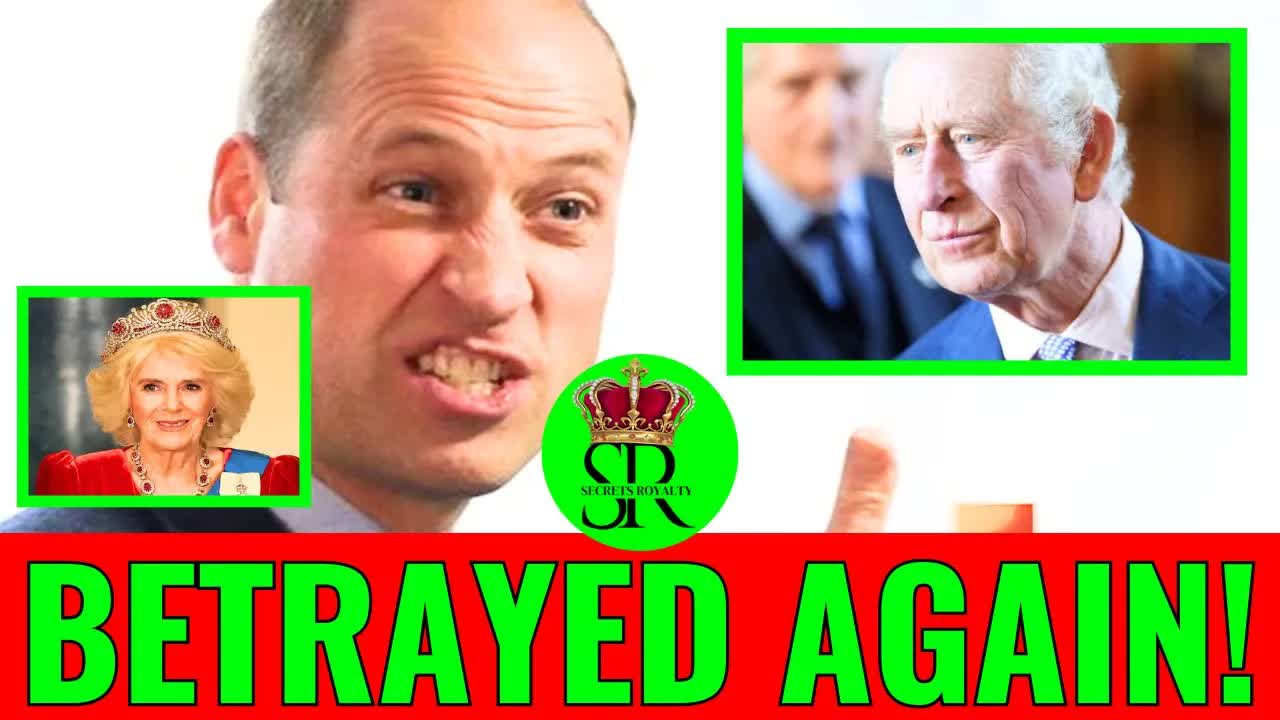
In a surprising twist within the royal family, Prince William is reportedly feeling frustrated with King Charles.
This tension stems from a recent decision that has reignited long-standing issues between them, highlighting themes of legacy, emotional scars, and how the public views the monarchy.
At the center of this controversy is King Charles’s choice to assign Queen Camilla a role that traditionally aligns with William’s future responsibilities as the heir to the throne.
For William, this decision strikes a deeply personal chord.
As the next in line for the throne, certain roles symbolize his preparation for kingship.
Seeing a portion of this legacy handed over to Camilla, who has a complicated history with his late mother, Princess Diana, adds an emotional layer to the situation.
The memory of Diana looms large in both the public’s mind and within the royal family, making this decision feel like a slight against her legacy for William.
It raises broader questions about how the monarchy reconciles its past with its present.
Queen Camilla’s journey within the royal family has been nothing short of transformative.
Once viewed as a divisive figure, she has gradually earned her place as a trusted member of the monarchy during Charles’s reign.
Her growing influence reflects King Charles’s efforts to modernize the royal family, but this evolution hasn’t come without its critics.
Public opinion remains split; some applaud her resilience while others question her suitability for such high-profile roles.
The public reaction to this internal family drama has been quite vocal, with social media buzzing with debates.
Supporters have rallied behind both sides, creating factions like #TeamWilliam and #QueenCamilla.
Those on William’s side see him as a relatable, modern face of the monarchy, a prince striving to modernize royal traditions while keeping a connection to the public.
In contrast, Camilla’s supporters emphasize her dedication and her journey from controversy to respectability.
This family conflict underscores a larger struggle within the monarchy itself, particularly the challenge of balancing tradition with modernization.
King Charles, known for his commitment to updating the institution, now faces the repercussions of his decisions on the next generation.
The relationship between the monarch and the heir is crucial, not just for family unity but also for the monarchy’s future relevance and stability.
Amidst this turmoil, Kate Middleton emerges as a stabilizing force for William.
Her support and potential role as a mediator could prove vital in navigating these tensions.
As a future queen consort, her influence in maintaining harmony within the family and fostering public confidence in the monarchy cannot be overlooked.
This unfolding situation also brings to mind historical royal conflicts where personal emotions clashed with public duties.
From the abdication crisis to Elizabeth I’s rivalry with Mary, Queen of Scots, the royal family has long dealt with the interplay between personal feelings and institutional responsibilities.
The current friction between Charles and William feels like another chapter in this rich history, with implications that could shape the monarchy’s direction for years to come.
The resolution of this conflict will significantly impact the dynamics between King Charles and Prince William.
It could also redefine how the public perceives the monarchy’s ability to adapt to contemporary expectations.
Whether they find a way to compromise, confront each other directly, or remain silent, the outcome will be closely monitored by a world fascinated by the ongoing drama of the House of Windsor.