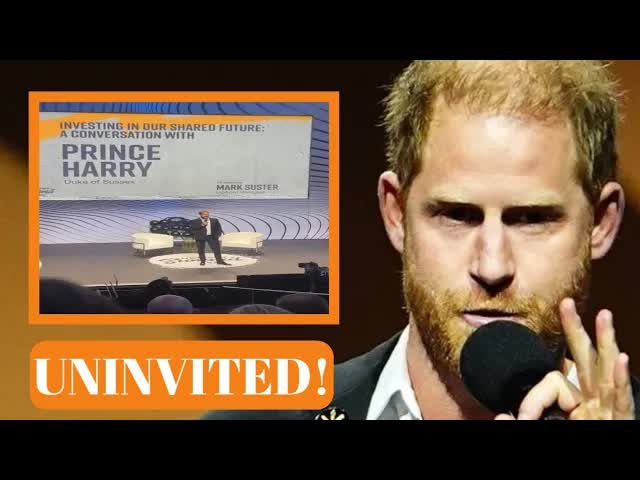
In a recent public appearance that sparked widespread criticism, Prince Harry, the Duke of Sussex, found himself in hot water after addressing attendees at the Upfront Summit.
His unexpected presence at this esteemed business conference left many questioning the rationale behind his invitation.
As he delivered a speech on privilege and responsibility, audience members began to discreetly exit, underscoring the disconnect between his message and the expectations of the crowd.
The incident unfolded last Thursday when Harry took the stage, aiming to connect with self-made entrepreneurs and investors.
However, his opening remarks struck an off-key note.
“As a man who was born into a life of service, I recognize that with power and a platform comes responsibility,” he proclaimed.
Ironically, this statement seemed out of touch, considering he was addressing a room filled with individuals who had forged their own paths to success, while he has relied heavily on his royal background and inherited wealth.
Sources from the event revealed that Harry’s appearance was not initially part of the program, raising eyebrows about how he managed to secure a speaking slot.
One attendee, wishing to remain anonymous, expressed disappointment, stating, “We came to hear from innovative business leaders, not a disillusioned prince sharing family drama.”
The palpable disconnect between Harry’s message and the audience’s expectations became evident as he continued his speech.
As Harry spoke about finding purpose and authentic leadership, it became clear that many attendees were losing interest.
Witnesses reported that by the halfway point of his 40-minute address, nearly a third of the seats were empty.
Venture capitalist James Henderson described it as “painful to watch,” highlighting Harry’s lack of experience in the workforce compared to the seasoned professionals in the room.
This event highlighted a recurring theme in Harry’s post-royal life: his apparent inability to gauge the reactions of those around him.
After stepping back from royal duties in pursuit of financial independence, he seems disconnected from how his privileged background resonates with everyday people, particularly those who have built their careers from the ground up.
Tech entrepreneur Sarah Liu remarked, “This is someone whose entire career is built on family connections and exploiting royal drama.”
Harry’s speech touched on familiar topics like mental health and the toxicity of social media, yet without substantial personal achievements to back his claims, his words felt hollow.
The Upfront Summit is known for featuring speakers who have demonstrated real business success, such as Elon Musk and Serena Williams.
Harry’s inclusion on the lineup appeared out of place and raised questions about his qualifications to address such a discerning audience.
Investor Michael Chen voiced his confusion, stating, “He spoke about earned wisdom, but never established what he’s actually done besides being born into the right family.” As he continued, Harry reiterated themes of authentic leadership and using privilege for good, but these messages fell flat among a crowd accustomed to the realities of hard work and perseverance.
Media analyst Diane Woodward pointed out the irony of hearing lectures on privilege from someone whose identity is deeply rooted in hereditary status.
This sentiment resonated with many in attendance, who felt that Harry’s perspective lacked credibility in a professional setting where merit is paramount.
Harry’s delivery, described by several attendees as mechanical and overly polished, further detracted from his message.
Marketing executive Robert Thompson noted that it felt akin to a rehearsed royal speech, lacking the genuine connection he claimed to advocate for.
Despite the dwindling audience, Harry remained oblivious, continuing with enthusiasm as more people slipped out of the venue.
This episode underscores the precarious position Harry occupies in public life.
Having distanced himself from royal duties, he still capitalizes on his royal identity, creating a confusing personal brand that many find difficult to reconcile.
Celebrity brand consultant Elena Ramos explained that Harry’s desire to be seen as a thought leader conflicts with the very privilege he critiques.
Insiders suggest that Harry’s high speaking fees may explain his continued presence in such circles, despite mixed reactions.
An events planner pointed out, “Someone’s writing checks for these appearances, but how long will that last if the feedback remains negative?”
What made this particular appearance noteworthy was its business context, where audiences expect substance over empty rhetoric.
Business psychology professor Dr. Nathan Rivera emphasized that in a world driven by measurable results, Harry’s authority is questionable at best.
As he wrapped up his remarks to polite but lukewarm applause, the stark contrast between his presentation and that of other speakers was evident.
Following his speech, Harry was quickly escorted away by security, bypassing the traditional networking that usually follows such events.
This further emphasized the disconnect between his message and the reality of engagement.
Venture capitalist David Reynolds remarked, “Most speakers stick around, but Harry delivered his sermon from on high and then disappeared.”
Social media reactions to Harry’s appearance were swift and largely critical, with many questioning the decision to include him in a business-focused event.
One user quipped, “Who keeps booking Prince Harry to lecture actual self-made people about responsibility and privilege?” The organizers of the Upfront Summit declined to comment on the circumstances of Harry’s invitation, leaving many to speculate whether it was arranged through personal connections rather than merit.