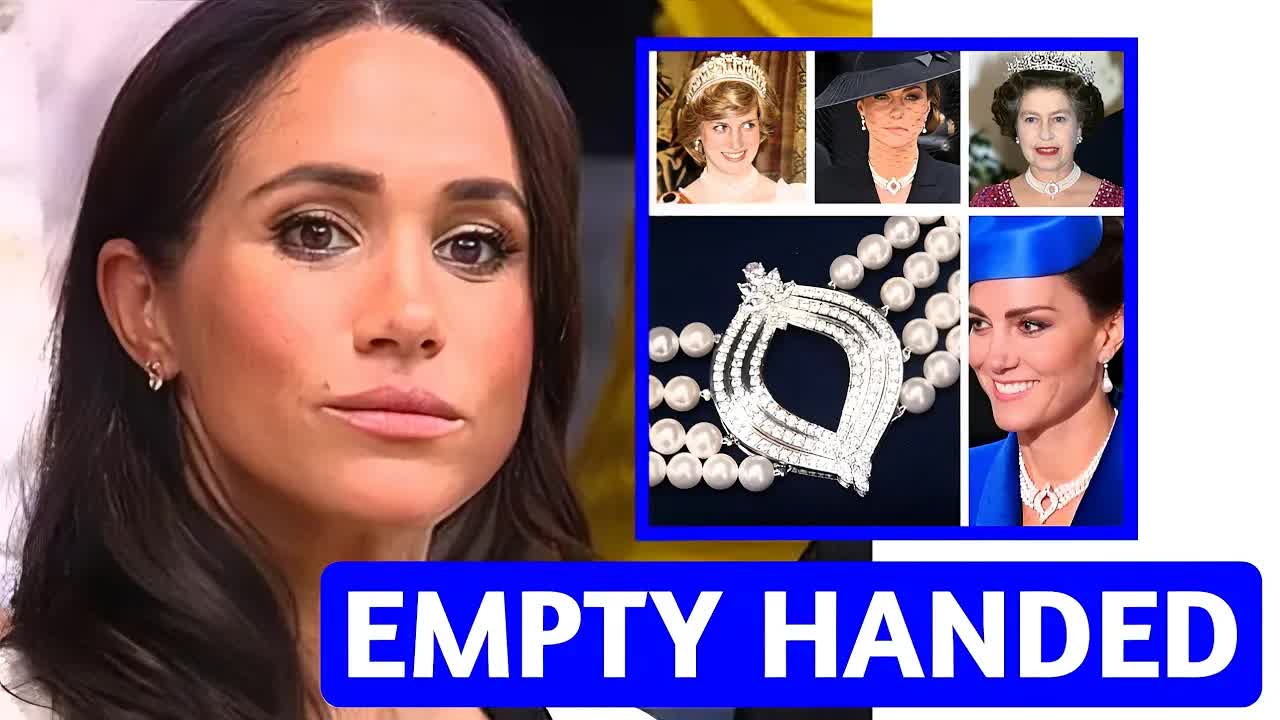
In a royal twist that has captured public attention, Kate Middleton has inherited one of Queen Elizabeth II’s most treasured possessions: her favorite pearl necklace.
Meanwhile, Meghan Markle finds herself without any such legacy from the late monarch.
This intriguing story unfolds like a classic tale of family drama, layered with history and sentimentality, as we delve into why the pearls now belong to the Duchess of Cambridge and what it means for both women.
First off, let’s take a moment to appreciate the significance of this pearl necklace.
It’s not just any piece of jewelry; it has adorned Queen Elizabeth during countless state functions and portraits, symbolizing grace, power, and continuity within the royal lineage.
Unlike flashy diamonds, pearls embody a subtle elegance that resonates deeply with the Queen’s own style and reign.
They represent not just wealth, but also a quiet strength that has been a hallmark of her monarchy.
So, why did Kate receive this iconic piece?
The answer lies in the intricate relationship dynamics within the royal family.
Queen Elizabeth had a special bond with Kate, often expressing admiration for her commitment to royal duties and her ability to balance tradition with a modern approach.
On the other hand, Meghan’s journey has been tumultuous, marked by her and Prince Harry‘s decision to step back from their royal roles, which has created a palpable rift between her and the rest of the family.
This divide raises questions about the contrasting philosophies of Kate and Meghan regarding their royal responsibilities.
While Kate has embraced tradition and sought ways to modernize it respectfully, Meghan has taken a more rebellious stance, challenging the norms of royal life.
This fundamental difference could very well explain why the Queen chose to pass down her beloved pearls to Kate instead of Meghan.
It’s worth pondering whether the Queen always viewed Kate as the rightful heir to her cherished jewels.
Did Kate’s demeanor and approach to royal life resonate with the Queen from the very beginning?
The inheritance of the pearls might signify more than just a reward for loyalty; it could reflect a deeper understanding of what the monarchy represents in today’s world.
For Meghan, not receiving the necklace doesn’t mean she’s been overlooked entirely.
Her path diverges from royal expectations, focusing on her advocacy and personal projects.
While the pearls may symbolize tradition and duty for Kate, Meghan’s true inheritance lies in her newfound freedom to carve out her own identity and legacy outside the constraints of royal life.
Imagine the emotional weight of discovering that Kate received the Queen’s necklace.
It must have felt like a sting for Meghan, a reminder of her separation from royal traditions.
Yet, perhaps this is a blessing in disguise.
Instead of being tied to royal jewels, Meghan has the opportunity to define her own legacy, one that champions independence over adherence to tradition.
Kate Middleton’s inheritance is not merely about donning a beautiful necklace; it signifies her role as a future Queen Consort.
She embodies the qualities the monarchy needs to navigate its evolving landscape—balancing tradition with modern expectations.
The pearls serve as a reminder of her responsibilities and the legacy she is entrusted to uphold.
As Queen Elizabeth’s legacy transcends her jewelry, so too does the essence of what it means to inherit something of value.
Inheritance, after all, extends beyond material possessions.
It encompasses the values, lessons, and opportunities passed down through generations.
This royal saga illustrates two distinct paths shaped by individual choices and circumstances.
The public perception of both Kate and Meghan plays a crucial role in how their legacies will be remembered.
Kate is often seen as a stable figure, respected for her poise and dedication to the monarchy.
Conversely, Meghan’s image is more complex; she’s viewed by some as a pioneer of independence, while others criticize her departure from royal norms.
How these perceptions evolve will undoubtedly influence their respective legacies.
Ultimately, the choices made by both women reflect broader themes we all encounter in our lives.
Whether we lean toward tradition or forge our own paths, the decisions we make shape our identities and legacies.
As we observe this royal narrative unfold, it prompts us to consider our own journeys.
Would you choose the allure of royal pearls or the freedom to live authentically?
This royal tale serves as a powerful reminder that the legacies we build are defined by our choices.
Both Kate and Meghan offer valuable lessons in navigating the balance between duty and independence.
As we reflect on their stories, we’re left to ponder: what kind of legacy do we want to create for ourselves?