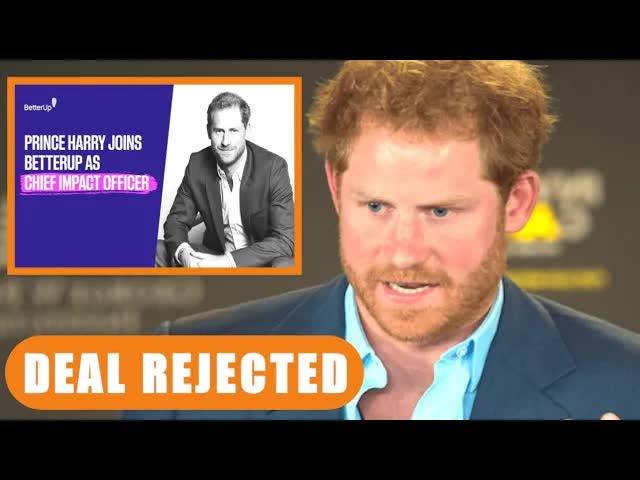
In a shocking development that has reverberated through both the corporate and philanthropic sectors, mental health startup BetterUp has ended its partnership with Prince Harry.
This decision adds to the mounting challenges faced by the Duke of Sussex, whose once-promising ventures appear to be faltering.
The news comes as major sponsors like Netflix and Boeing have also pulled their support from the Invictus Games, a charity event close to Harry’s heart.
The withdrawal of these prominent sponsors raises serious concerns about the future of the Invictus Games, which was designed to honor wounded veterans.
Insiders suggest that the shift in focus from supporting these heroes to promoting Harry’s personal brand has not gone unnoticed.
Marcus Blackwood, a former liaison for corporate sponsors, expressed dismay at how the Games have morphed into “The Harry Show,” straying from its original purpose of celebrating military resilience.
The timing of BetterUp’s decision is particularly unfortunate for Harry, who has seen his American dream unravel since stepping back from royal duties.
Although BetterUp has remained tight-lipped about the reasons behind the split, sources indicate that the financial return on Harry’s role was not meeting expectations.
Corporate analyst Sarah Henderson pointed out that Harry’s appeal has diminished, making it increasingly difficult for companies to justify keeping him on board.
The Invictus Games, which began in 2014 as a beacon of hope for injured service members, now stands at a crossroads.
Once celebrated for its mission of rehabilitation through sports, the event has been overshadowed by Harry’s ongoing personal controversies, including his memoir and public disputes with the British royal family.
The exit of Boeing, a key supporter that provided both funding and logistical assistance, has left a significant void that smaller sponsors may struggle to fill.
James Morrison, a veteran sports administrator, lamented the loss of the Games’ original spirit.
He noted that the event started with noble intentions but has become mired in celebrity drama and corporate politics.
The true victims of this situation are the athletes who rely on the Games for inspiration and community after their service-related injuries.
Harry’s personal brand is also taking a hit.
Once viewed as a fresh face in the corporate arena, he now finds himself increasingly marginalized.
The separation from BetterUp strikes at the core of his image as a mental health advocate, raising questions about the sustainability of his celebrity-driven initiatives.
Media analyst Patricia Chen remarked that the public’s interest in Harry’s story is waning, suggesting that there’s only so much one can monetize their family disputes before it becomes tiresome.
The fallout from these corporate withdrawals extends beyond immediate financial implications.
The Invictus Games Foundation now faces the daunting challenge of rebuilding its sponsor base in a skeptical market.
With several smaller sponsors reconsidering their commitments, there’s a looming fear of a domino effect that could jeopardize future events.
Ironically, this turmoil comes as Harry sought financial independence after leaving royal life.
Instead of achieving autonomy, he appears to have exchanged one form of dependency for another, now relying on corporate goodwill rather than royal patronage.
For many veterans, the potential scaling back or even cancellation of the Games would represent a heartbreaking loss.
As Harry grapples with this latest setback, the question arises: what’s next for him?
With Netflix reportedly reconsidering future collaborations, his options for sustaining his lifestyle and charitable efforts seem to be dwindling.
This situation prompts a broader discussion about the viability of celebrity-driven charitable initiatives.
When a founder becomes more controversial than the cause itself, how can organizations stay true to their missions?
The Invictus Games Foundation is attempting to maintain a positive outlook, stating that they are exploring new partnerships while reaffirming their commitment to veterans.
However, operating without major corporate backing poses significant challenges in today’s competitive landscape.
As this story unfolds, it’s evident that Prince Harry’s fairy tale of independence is encountering harsh realities.
The corporate world, unlike the royal family he distanced himself from, is proving to be less forgiving.
For a man who once seemed to have the magic touch, the recent spate of corporate exits suggests that his star may be losing its luster.
The future of the Invictus Games hangs in the balance, and all eyes are on Harry as he navigates this turbulent chapter.
Will he find a way to reinvent himself once again, or does this mark the beginning of a steep decline in his post-royal endeavors?
Only time will reveal if the Games can weather this storm and continue to serve as a platform for inspiring veterans around the world.