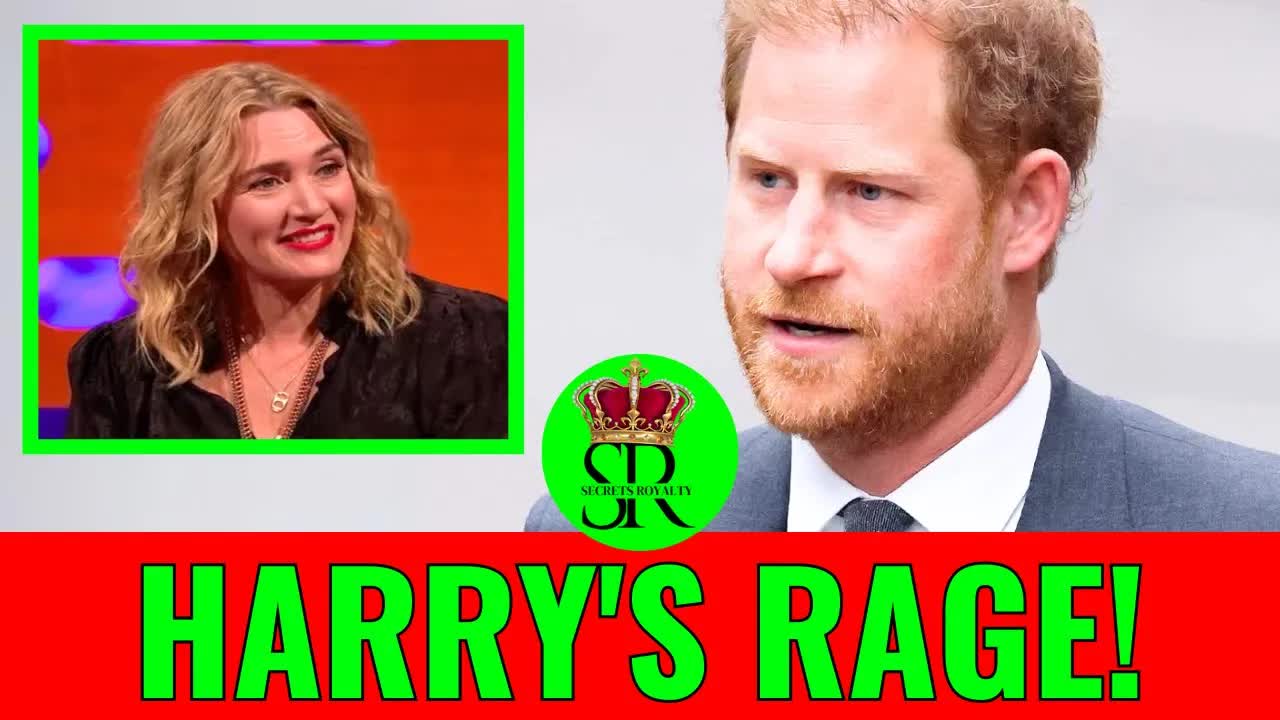
In a recent live taping of The Graham Norton Show, an unexpected and dramatic moment unfolded between Prince Harry and acclaimed actress Kate Winslet.
The tension ignited when Prince Harry requested that Winslet address him as “Your Highness.”
However, in true Winslet fashion, she brushed off the request with a casual dismissal, stating that titles held little significance for her.
This exchange quickly sparked a wave of public reaction, with many rallying behind Winslet’s perspective.
Winslet’s response was unapologetic and showcased her refusal to conform to hierarchical norms.
Her confident demeanor resonated with viewers around the globe, reflecting a cultural shift away from outdated traditions.
It wasn’t just a personal stand; it symbolized a larger movement against the reverence often granted based solely on inherited status.
By rejecting royal formalities, Winslet struck a chord with those who value authenticity over privilege.
The public’s reaction was swift and overwhelmingly supportive of Winslet.
Social media lit up with discussions about the incident, and hashtags like #Kate and #NotYourHighness quickly began trending.
Fans praised Winslet’s straightforward approach, viewing her defiance as a representation of their own beliefs in equality and authenticity.
Memes began circulating, depicting Winslet as a hero in a narrative challenging the entitlement often associated with royalty.
This incident also reignited criticism surrounding Prince Harry.
Detractors pointed out a perceived hypocrisy in his insistence on royal deference while simultaneously distancing himself from the monarchy.
The encounter painted him as someone who wanted to enjoy the perks of royal life without the responsibilities, leading to questions about his true commitment to breaking away from traditional structures.
The confrontation between Winslet and Prince Harry encapsulated a broader societal shift toward rejecting established hierarchies in favor of meritocracy and individuality.
Winslet’s actions served as a metaphor for dismantling outdated systems of authority, highlighting modern values that prioritize authenticity over legacy.
This moment was more than just a celebrity spat; it was a reflection of changing attitudes in society.
Moreover, the incident posed significant challenges for the British monarchy.
As an institution rooted in centuries-old traditions, the monarchy faces the daunting task of remaining relevant in a world increasingly critical of inherited privilege.
Winslet’s stance highlighted just how disconnected the monarchy can seem from contemporary societal values, raising questions about its future.
The implications of this cultural clash extend beyond the realm of celebrity gossip.
Public alignment with Winslet against Prince Harry serves as a reminder of the diminishing influence of royal formalities in today’s society.
It invites contemplation about whether the British monarchy can adapt to a landscape that prioritizes substance over ceremony.
As this incident continues to reverberate through social media and public discourse, it underscores the growing disillusionment with privilege that lacks purpose.
The divide between traditional structures and modern ideals has never seemed wider, capturing the essence of an era that increasingly values equality and authenticity.